Answer Engine Optimization (AEO): How Singapore Businesses Get Found in AI Answers
11 October 2026 · 7 min read
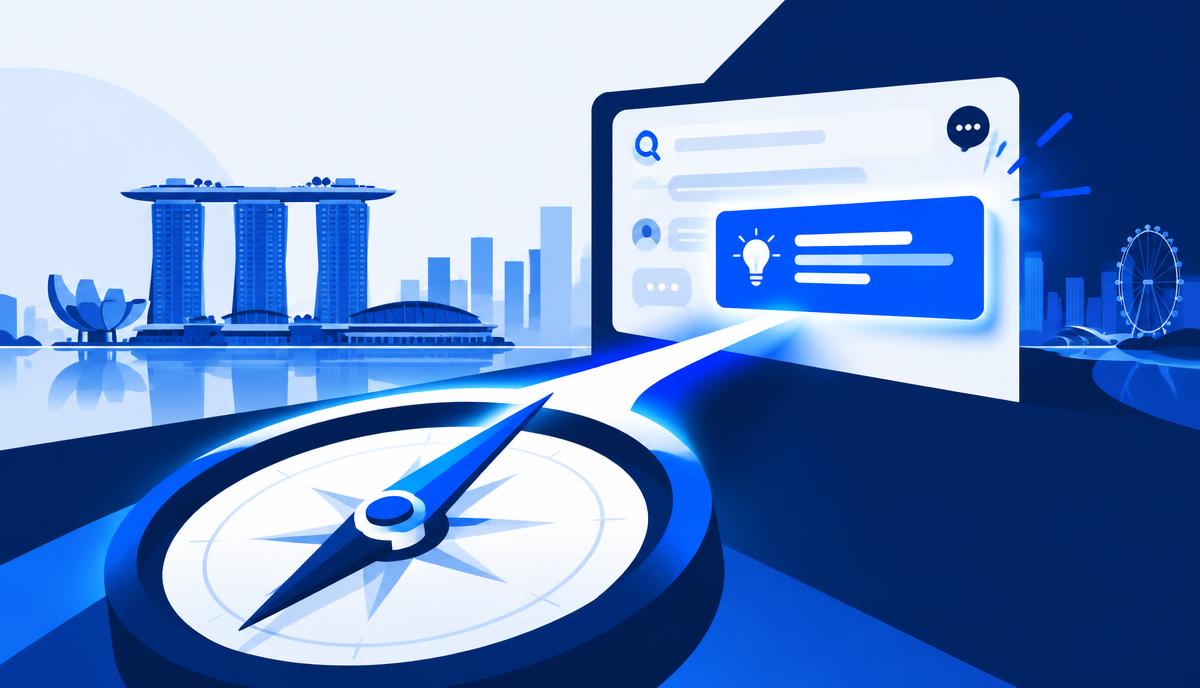
More customers are asking AI assistants for recommendations instead of scrolling through search results. Answer Engine Optimization (AEO) is the practice of structuring your online presence so these assistants can find, understand, and confidently recommend your business. For Singapore businesses preparing for ChatGPT Ads and other AI channels, AEO is the organic foundation that paid campaigns build on.
What is Answer Engine Optimization?
Traditional SEO optimises for a list of blue links. AEO optimises for the single answer an AI assistant gives when someone asks a question like “Who does aircon servicing in Tampines?” or “What is a good accounting firm for a Singapore startup?”. The assistant reads across the web, synthesises an answer, and cites or recommends a small number of businesses.
If your business information is unclear, inconsistent, or thin, the answer engine skips you — no matter how good your service is. AEO is about removing that ambiguity.
How answer engines choose sources
Answer engines tend to favour businesses that make verification easy. The signals that matter most:
- Clear, specific service pages — each page answers one intent completely, in plain language, with real details (areas served, pricing approach, process).
- Consistent business identity — the same name, address, phone number, and description across your website, Google Business Profile, and directories.
- Structured data — schema markup (Organization, LocalBusiness, FAQ, Service) that tells machines exactly what you do and where.
- Evidence of trust — genuine reviews, case studies, and substantiated claims rather than vague superlatives.
- Fresh, question-based content — pages and articles that directly answer the questions customers actually ask.
AEO vs SEO: what changes
AEO does not replace SEO — it extends it. The practical differences:
- From keywords to questions — optimise for the full questions people ask, not just short keyword phrases.
- From rankings to citations — success is being named or cited in the answer, not just appearing on page one.
- From traffic to answers — some searches end without a click, so your brand name and offer must be clear inside the answer itself.
- From pages to entities — engines build a profile of your business as an entity; consistency everywhere matters more than any single page.
A five-step AEO checklist for Singapore businesses
Work through these in order before investing in paid AI channels:
- 1. Audit your identity — make your business name, address, phone, and service description identical across your site and every listing.
- 2. Answer real questions — write one page or section per customer question, with a direct answer in the first two sentences.
- 3. Add structured data — implement Organization, LocalBusiness, and FAQ schema so machines can parse your details.
- 4. Substantiate every claim — replace “best” and “leading” with verifiable facts, numbers, and reviews.
- 5. Prepare for paid — once answer engines can understand you, ChatGPT Ads and other AI ad formats can amplify a message that is already clear.
How AEO connects to AI ads readiness
AEO and AI advertising readiness are two sides of the same coin. Both depend on clear intent mapping, landing pages that answer the question, substantiated claims, and proper tracking. Businesses that score well on our Ads Readiness Checker typically already have strong AEO foundations — and vice versa.
Run the free checker to see where you stand, then use the Campaign Builder to turn your AEO groundwork into a structured AI ads plan.